Archival and Next-Gen Delivery Image Formats: Adobe DNG, 16-Bit TIFF (LZW/ZIP), PNG, WebP, and AVIF Compression Physics
🗄️ Digital Preservation Standards & Next-Gen Web Codecs An authoritative software engineering and archival imaging dissertation comparing open-standard master containers against modern web codecs. We dissect Adobe DNG (Digital Negative ISO 12234-2), 16-Bit TIFF (LZW vs. ZIP/Deflate lossless compression), PNG alpha transparency, and pit legacy JPEG against Google WebP (VP8) and AV1 Image File Format … Read more
Digital Color Spaces and Bit Depth Physics: sRGB vs. Adobe RGB vs. ProPhoto RGB, CIE 1931 Gamuts, and 8-Bit vs. 16-Bit Posterization

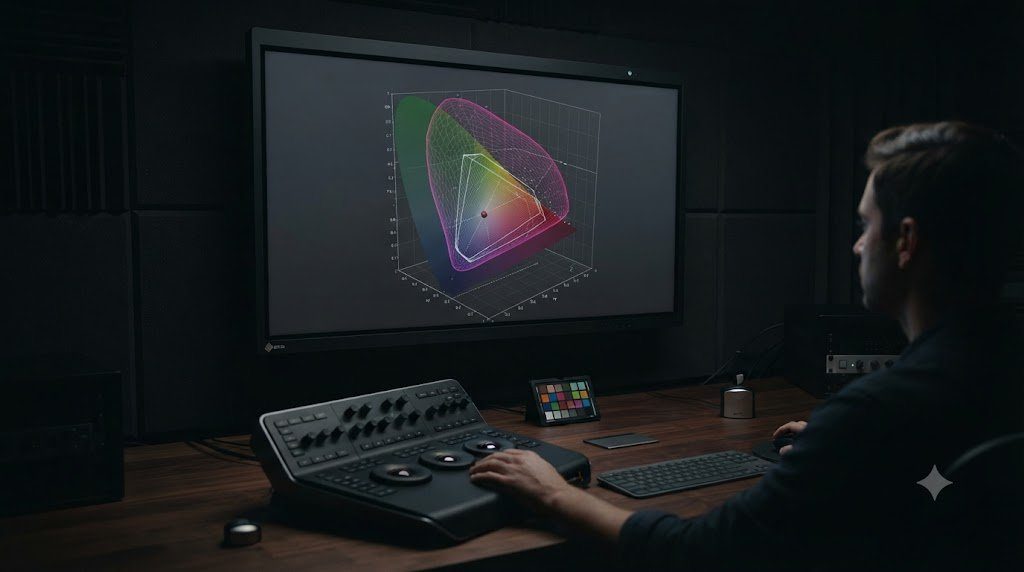
🌈 Colorimetric Gamut Geometry & ICC Profile Transforms An authoritative color science dissertation dissecting RGB Working Color Spaces inside the CIE 1931 Chromaticity Horseshoe. We compare sRGB (IEC 61966-2-1), Adobe RGB (1998), Display P3, and ProPhoto RGB (ROMM RGB) primaries, D65 vs. D50 White Points, Transfer Gamma Curves (2.2 vs. 1.8), and prove why ProPhoto … Read more

RAW Compression Architectures: Uncompressed vs. Lossless Compressed vs. C-RAW and High-Efficiency RAW (TicoRAW & Wavelets)

🗜️ Entropy Coding, Non-Linear LUT Quantization & Wavelet RAW An authoritative information-theory dissertation on camera RAW compression algorithms. We dissect Uncompressed 14-bit packing vs. Lossless Huffman/LZW prediction coding, explain how Lossy Compressed RAW uses photon-shot-noise square-root Lookup Tables (LUTs), and analyze modern Wavelet/Sub-band codecs like Nikon High-Efficiency N-RAW (intoPIX TicoRAW) and Canon C-RAW. When configuring … Read more

RAW vs. JPEG vs. HEIF Image Formats: Linear 14-Bit Sensor Data, Demosaicing Pipelines, and Chroma Subsampling (4:4:4 vs. 4:2:0)

💾 Digital Image Signal Processing (ISP) & Compression Architecture An exhaustive photographic signal-processing dissertation comparing uncompressed 14-bit/16-bit Bayer RAW sensor dumps against 8-bit JPEG (ITU-T T.81 Discrete Cosine Transform) and 10-bit HEIF/HEIC (HEVC H.265 intra-frame coding). We dissect linear ADC code allocation, YCbCr luma-chroma separation, and 4:4:4 vs. 4:2:2 vs. 4:2:0 Chroma Subsampling. Every time … Read more

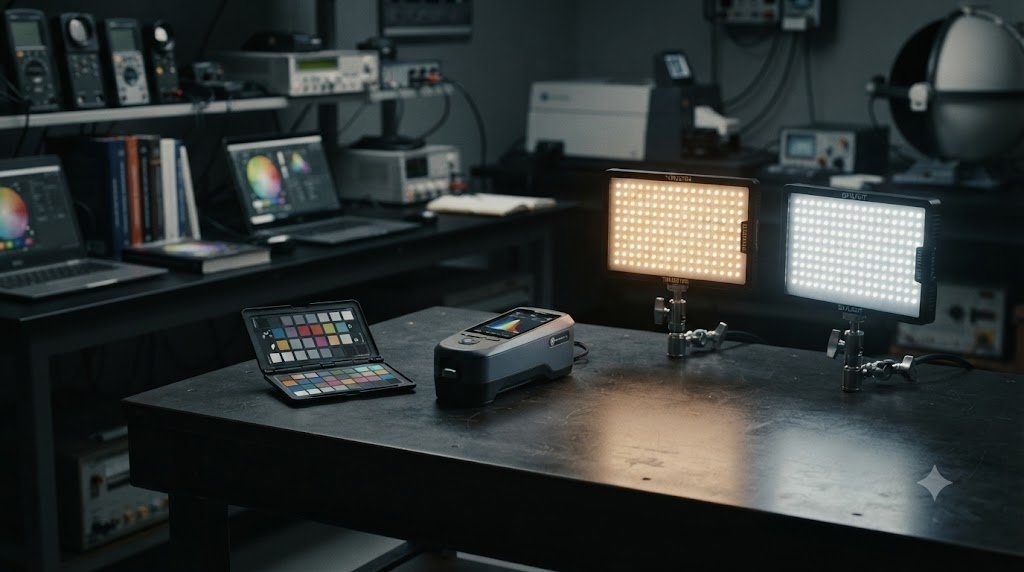
Color Temperature (Kelvin), Green-Magenta Tint, and Spectral Quality: Blackbody Radiation, CRI, TLCI, TM-30, and Gel Calibration

🌡️ Colorimetry, Planckian Blackbody Physics & Spectral Rendering An authoritative colorimetric science dissertation on photographic light quality. We formulate Planck’s Blackbody Radiation Locus (Correlated Color Temperature in Kelvin), Duv Green-Magenta Tint vectors, the Mired Shift equation for CTO/CTB optical gels, and dissect why standard CRI (Ra) fails on LEDs compared to TLCI and IES TM-30-20 … Read more

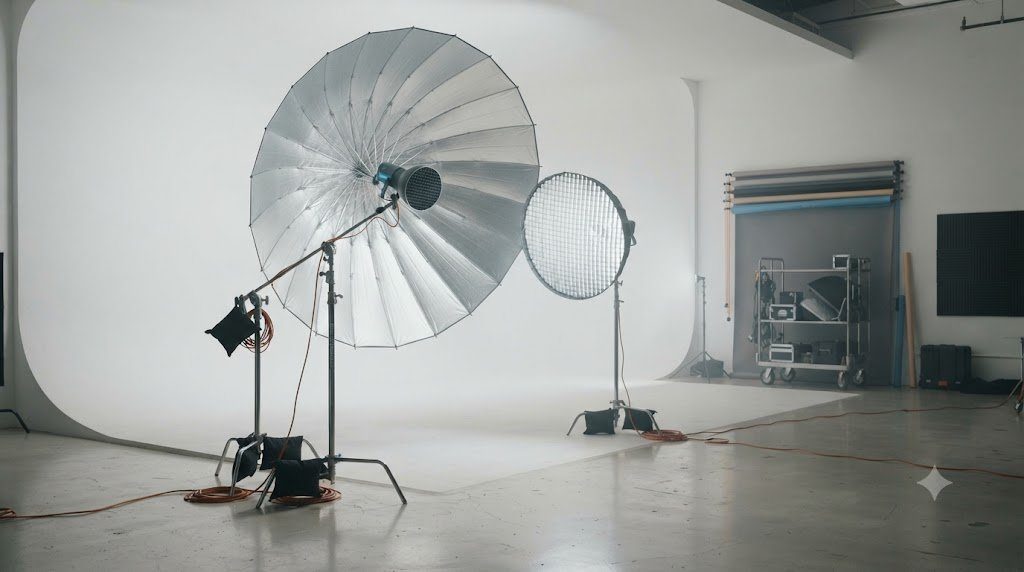
Photographic Light Modifiers Physics: Apparent Light Size, Softboxes, True Parabolic Reflectors, Beauty Dishes, and Grids

☂️ Geometric Specularity & Shadow Edge Transfer An authoritative studio lighting physics dissertation on Light Modifiers. We formulate the Angular Size Law of Shadow Softness (Umbra vs. Penumbra geometry), dissect Double-Diffused Softboxes vs. Octaboxes, analyze True Parabolic Reflectors (Broncolor Para / Briese focusable beam collimation), Beauty Dish deflected contrast, and Honeycomb Louver Grids. What actually … Read more

Studio Strobe and Flash Physics: IGBT vs. Voltage-Controlled Flash Duration (t0.1 vs. t0.5) and High-Speed Sync (HSS)

⚡ High-Voltage Xenon Discharge & Pulsed Strobe Electronics An authoritative electrical and optical engineering dissertation on studio flash systems. We dissect Xenon flash tube ionization, Capacitor Discharge Curves, t0.5 vs. t0.1 motion-freezing Flash Duration standards, IGBT (Insulated-Gate Bipolar Transistor) tail-chopping vs. Voltage-Regulated strobes, and High-Speed Sync (HSS) vs. Hypersync pulsing. When a commercial sports, dance, … Read more

The Inverse-Square Law in Photographic Lighting: Illuminance Falloff Mathematics, Guide Numbers, and Feathering

💡 Photometric Radiometry & Studio Lighting Geometry An exhaustive photographic lighting physics dissertation dissecting the Inverse-Square Law of Electromagnetic Radiation (E = I / d^2). We formulate point-source vs. extended-source modifier falloff, distance-to-contrast ratios for lighting large groups vs. moody low-key portraits, Guide Number (GN) flash equations, and Modifier Edge Feathering. The single most powerful … Read more

Specialty Optics Mastery: Tilt-Shift Lenses, the Scheimpflug Principle, Perspective Control, and 1:1 Macro Flat-Field Design

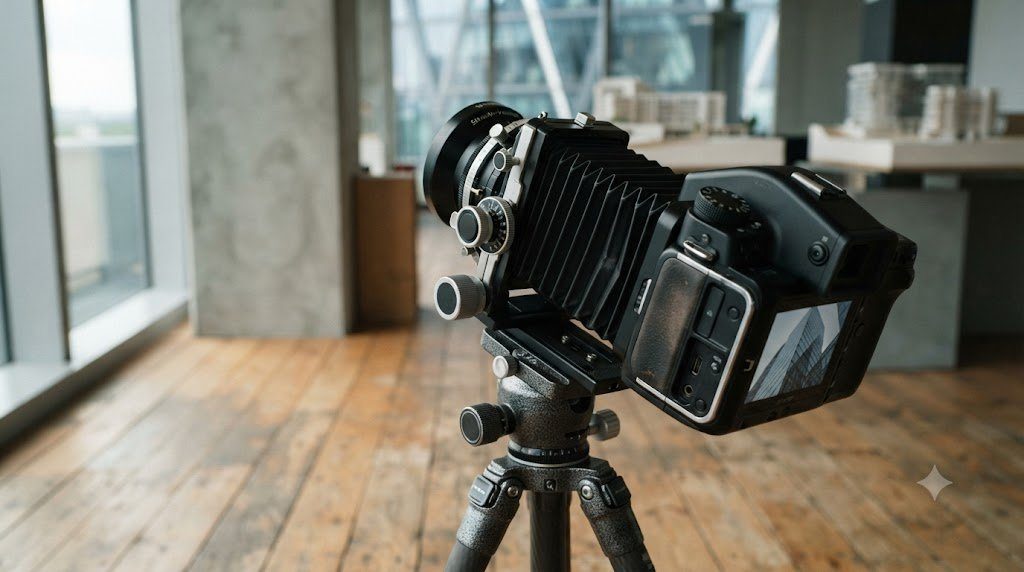
🏛️ Architectural Perspective Control & Close-Range Optical Physics An authoritative optical geometry dissertation on Tilt-Shift (Perspective Control) and True Macro lenses. We formulate Theodor Scheimpflug’s intersecting plane geometry, Hinge Rule calculations for infinite near-to-far sharpness at f/4, parallel optical Shift for eliminating architectural keystone convergence, and floating-element Flat-Field 1:1 Macro correction. In every conventional camera … Read more

Focal Length, Angle of View, and the Perspective Compression Myth: Optical Geometry, Flange Distance, and Telecentric Design

📏 Projective Geometry & Lens Mount Architecture An authoritative optical geometry dissertation dissecting Focal Length (f), Rectilinear vs. Equisolid Angle of View equations, proving why Perspective Compression is determined 100% by Camera-to-Subject Distance rather than focal length, and analyzing Mirrorless Short Flange Focal Distance and Image-Side Telecentricity. Every photographer has heard the classic rule of … Read more

About Photolabguide

About Photolabguide

Photolabguide is an authoritative technical resource providing in-depth analysis, comprehensive guides, and expert perspectives on Camera Sensors • Exposure • Lenses. We aim to equip specialists, practitioners, and enthusiasts with reliable, accurate, and actionable information.

Learn More →
Expert Research From verified industry specialists
Technical Guides Detailed workflows & analysis
Verified Quality Always updated & peer-reviewed